

Duct leaks, thin insulation, and unbalanced airflow can quietly rob an Arlington home of comfort long before the equipment itself is the problem. Here’s how to tell the difference.
Stop Wasting Cool Air: Is Your AC Working Overtime?
If your AC seems to run nonstop, yet some rooms still feel sticky and warm, the problem may not be the equipment. Many Arlington homes lose a lot of cooling through leaky ducts and weak insulation long before the air ever reaches your vents. The thermostat looks fine, the system is fairly new, but comfort and bills tell a different story.

When ducts leak or insulation is lacking, your AC has to work harder just to keep up. That means longer run times, noisy airflow, and higher energy use, even though nothing is actually “broken.” In this article, we will walk through how to spot duct and insulation problems, what real testing and sealing look like, and why that often does more for comfort and efficiency than basic HVAC duct cleaning in Arlington.
Common Signs Your Ducts and Insulation Are Failing You
Your home will usually “talk” to you when the air distribution is off. You may notice comfort issues long before you notice anything at the equipment.
Comfort red flags include:
- Hot and cold spots between rooms or floors
- Stuffy upstairs bedrooms that never cool down at night
- A room that never matches the thermostat, especially during the hottest part of the day
You might also see clues in how your AC runs:
- Long run cycles where the system rarely shuts off
- Short cycling, where it starts and stops often
- Weak airflow from some vents compared to others
- A dusty home even when you change filters on time
There are bill and noise hints too:
- Electric bills creeping up each summer compared to what you remember before
- Rattling or whistling sounds from the ductwork when the AC kicks on
- Ducts in the attic that feel warm when they should feel cool to the touch
These signs can show that cold air is leaking into the attic or crawlspace, or picking up extra heat before it gets to you.
Testing, Sealing, and Balancing vs. Just Cleaning Ducts
Many people hear “duct work” and think only about cleaning. Cleaning can help in some situations, but it will not fix leaks, bad connections, or poor airflow design. That is where testing, sealing, and balancing matter.
Professional duct testing often includes:
- Pressure testing the duct system to measure how much air leaks out
- Inspecting duct connections in attics, closets, and crawlspaces
- Checking each room’s supply and return to see if the airflow is balanced
Balancing means making sure each area of your home gets the right amount of air. A room with one tiny vent at the end of a long duct run will not feel the same as a room near the unit unless the system is designed and adjusted correctly.
HVAC duct cleaning in Arlington makes sense when:
- There is heavy dust or debris in the ducts
- You recently finished a big remodel
- You have concerns about indoor air quality from buildup or pests
But if your main complaints are hot rooms, noise, and high bills, sealing and correcting airflow usually give better long-term results than cleaning alone.
When we walk into a home, we focus on how the whole system is working. We inspect visible ducts, check the insulation around duct runs, test airflow and pressure, and look for leaks or crushed sections. Then we can recommend sealing, re-routing, or adjusting duct sizes before we ever talk about cleaning.
How Poor Insulation Steals Comfort in Arlington Summers
In Arlington and across the DFW area, attic spaces can reach very high temperatures. When insulation is thin, damaged, or missing in spots, your cooled air has to travel through that hot zone. By the time the air gets to your supply vents, it is no longer as cool as it should be.
Common signs of insulation problems include:
- Uneven or flattened insulation in the attic
- Duct runs that are exposed with little or no wrap
- Gaps around recessed lights, attic hatches, or access doors
- Wood joists in the attic that stick up well above the insulation level
Poor insulation forces your AC to run longer to overcome all that heat gain. This can cause:
- Higher run times and more wear on motors and parts
- Trouble keeping humidity under control
- That “never quite comfortable” feeling even when the thermostat says the right number
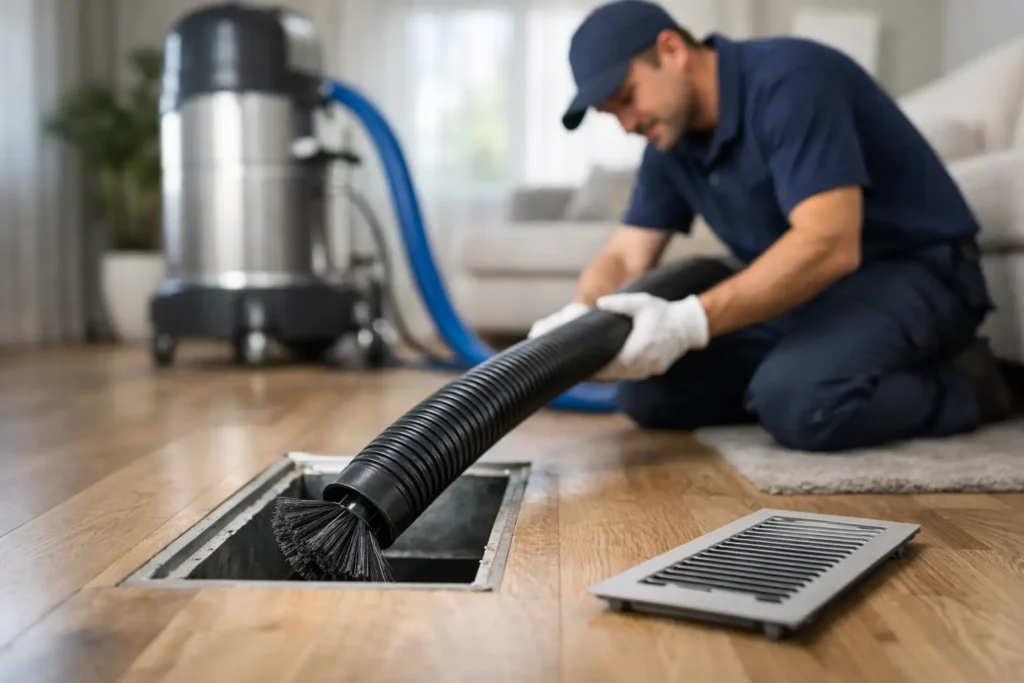
Upgrading insulation and sealing ducts at the same time often gives a double benefit. You keep cold air inside the ducts and slow heat from entering the home, instead of just cleaning dusty duct walls while the cooled air still escapes or warms up.
Simple At-Home Checks Before Calling the Pros
There are a few safe, basic checks you can try to get a sense of what is going on, as long as you are careful and avoid risky areas or tools.
For ducts, you might:
- Feel around accessible duct joints for obvious air leaks while the AC is running
- Hold a tissue near supply vents to compare airflow from room to room
- Gently look, from a safe attic path, if there is one, for disconnected or badly kinked flex duct
For insulation, you can:
- Look across the attic floor to see if insulation is low or uneven
- Notice any bare spots on ducts where the outer wrap is missing
- Pay attention to strong temperature differences near windows, exterior walls, or the ceiling
Expert Tip: When comparing AC vs. window cooling for energy efficiency, look beyond the unit’s size. A properly sized central AC with sealed ducts can cool multiple rooms more efficiently, while a window unit may use less energy when you only need to cool one small, occupied space.
If you notice large temperature gaps between rooms, see ducts that are crushed or fallen, or still have comfort issues after changing filters and checking your thermostat settings, it is time for a professional evaluation. At that point, guesswork can waste both time and energy.
Choose the Right Fix: When Cleaning Is Not Enough
There are times when HVAC duct cleaning in Arlington is the right call. This includes situations like:
- After major construction or drywall work inside the home
- When there are signs of pests inside ducts
- When there is visible buildup that affects allergies or breathing comfort
But cleaning alone does not:
- Seal air leaks
- Correct undersized or oversized duct runs
- Add missing insulation or fix hot attic pathways
If the real problem is cold air escaping into the attic or picking up heat in poorly insulated runs, cleaning might make things look better but will not keep your AC from working overtime. For long-term savings and comfort, most homes do better when they start with testing, sealing, and balancing, then add cleaning and filtration as part of an overall indoor air plan.
For lasting comfort and savings, most Arlington homes come out ahead by starting with testing, sealing, and balancing, then adding cleaning and filtration as part of a broader indoor air plan through our air quality services.
Take Control of Your Comfort with a Pro Duct Evaluation
When summer heat really settles in, that is when weak ducts and insulation show up the most. A focused duct and insulation assessment before your system is pushed to the limit can help prevent breakdowns and frustrating hot rooms.
At NewRise Heating & Cooling, we help Arlington and DFW homeowners by checking for duct leakage, recommending sealing methods, looking at insulation around duct runs, and balancing airflow so each room can feel closer to the set temperature. We also give honest advice on whether duct cleaning is actually needed or if your money is better spent fixing leaks and heat gain first.
Important Consideration: In Arlington, a high-efficiency AC unit can help reduce cooling costs during intense Texas summers, but performance also depends on proper sizing, installation, airflow, ductwork, and regular maintenance.
If your AC needs repair on top of an airflow issue, or it’s simply due for routine maintenance, we can handle that in the same visit.
Improve Your Indoor Air Quality And Comfort Today
If you are ready to breathe cleaner air and help your HVAC system run more efficiently, our team at NewRise Heating & Cooling is here to help.
Schedule professional HVAC duct cleaning in Arlington and let us clear out dust, allergens, and buildup from your ductwork. We will walk you through the process, answer your questions, and provide clear, upfront pricing. To get started or request a quote, simply contact us today.
FAQs About AC Efficiency in Arlington, TX, Homes
How do I know if my ducts are leaking cool air?
The clearest clues are hot or cold rooms that never match the thermostat, attic ductwork that feels warm to the touch, and an AC that runs long cycles without actually catching up. A visual check can catch obvious gaps or disconnected sections, but the only way to know how much air you’re actually losing is a pressure test, which measures leakage rather than guessing at it.
Will duct cleaning fix uneven cooling in my home?
Usually not on its own. Cleaning removes dust and debris, which can help airflow slightly, but it doesn’t seal leaks, correct undersized duct runs, or fix a room that was never balanced against the rest of the system. If uneven cooling is the main complaint, duct testing and balancing typically solve it; cleaning is worth adding on top when there’s also visible buildup or allergy concerns.
Does duct sealing actually lower my energy bills?
It can, since a leaky duct system forces the AC to run longer to make up for cooled air that never reaches the room it was meant for. How much you’d save depends on how much leakage a pressure test finds and how the ductwork is routed, so we’d rather test your specific system and give you real numbers than quote a general estimate that may not apply to your home.
How hot does my attic actually get in an Arlington summer, and does it matter?
Attics across Arlington and the rest of DFW commonly reach 120°F to 150°F on a hot afternoon. Any ductwork running through that space is fighting to keep air cool, and any gap in insulation lets that heat radiate down into the rooms below. That’s why insulation and duct condition tend to matter as much as the AC unit itself once outdoor temperatures climb into the upper 90s and above.
Should I add attic insulation, reseal my ducts, or do both?
They address different problems, so doing both at the same time usually gives the best result. Sealing keeps cooled air inside the ducts where it belongs, while insulation slows how much attic heat reaches the living space and the ductwork in the first place. Fixing only one often leaves part of the original problem in place.
How do I know if I need duct testing or just a standard duct cleaning?
If your main complaints are hot rooms, high bills, or an AC that never seems to catch up, that points to leaks or airflow imbalance, which testing and sealing address. If the concern is dust, buildup, or a recent remodel or pest issue, duct cleaning is the better starting point. A lot of Arlington homes benefit from both, which is why we evaluate the whole system before recommending one over the other.